You have 0 items in your cart

Buying land in Kenya can be one of the biggest financial decisions you make. Whether you are purchasing a residential plot, agricultural land, an apartment, a commercial property or an investment parcel, the person selling the property must be properly identified and legally authorised to complete the transaction.
Unfortunately, land fraud does not always involve fake title deeds.
Sometimes the title deed is genuine, the parcel exists, the land is properly registered and the seller’s documents appear convincing—but the person presenting themselves as the owner is not the actual registered proprietor.
A fraudster may impersonate the registered owner, use stolen identification documents, present a fake Power of Attorney, pose as a company director, or claim to have authority to sell land belonging to a deceased person.
In other situations, a genuine owner may have appointed someone to sell the land, but that representative has exceeded their authority.
This is why verifying the title deed alone is not enough.
You must independently verify the identity of the person selling the property, confirm that they are the registered owner or legally authorised representative, and establish that they have the authority to complete the proposed transaction.
This guide explains how to verify a land seller in Kenya before signing a sale agreement or paying a deposit, what documents to examine, how to identify impersonation risks, and what to do when something does not add up.
Why Verifying the Land Seller Is as Important as Verifying the Title
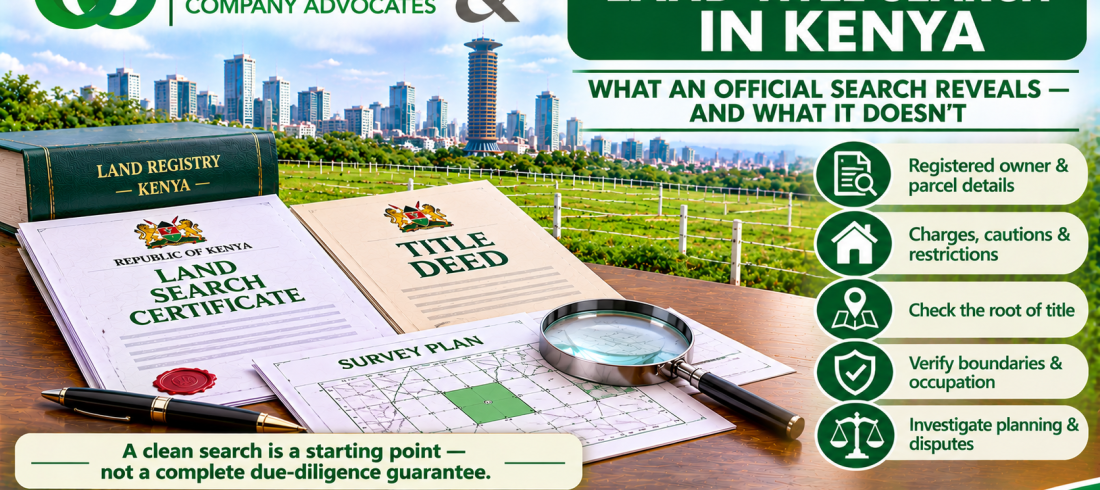
A land title search helps establish who is recorded as the registered proprietor.
But it does not automatically establish that the person standing before you is that proprietor.
Consider the following example.
A buyer is shown a title deed for a plot in Kitengela. The seller provides a copy of their national ID, a KRA PIN certificate and a sale agreement. The buyer conducts a land search, which confirms that the property is registered in the name of the person whose name appears on the documents.
The buyer is satisfied and pays a deposit of KSh 500,000.
Later, the real registered owner discovers that someone has been using their identity to sell the land.
The buyer may now face a serious legal dispute involving the alleged seller, the registered owner, the title, the payment and the transaction documents.
The problem was not necessarily that the title deed was fake.
The problem was that the buyer failed to establish whether the person receiving the money was the actual owner or a legally authorised representative.
A safe land purchase therefore requires two separate investigations:
- Title verification: Is the ownership and registration of the property legally sound?
- Seller verification: Is the person selling the property genuinely the owner or legally authorised to act on the owner’s behalf?
Both checks are necessary.
Step 1: Obtain the Seller’s Full Name and Identification Documents
Before entering into serious negotiations, request the seller’s full legal name and appropriate identification documents.
For an individual seller, this may include:
- National identity card.
- Passport, where applicable.
- KRA PIN certificate.
- Other supporting identification documents where necessary.
Do not rely only on a name written on a WhatsApp message, a business card, a broker’s introduction or a photocopy of an ID.
The identification documents should be reviewed as part of an independent verification process.
Compare the seller’s name with the land register
Conduct an official land search and compare the registered proprietor’s name with the name appearing on the seller’s identification documents.
Check for:
- Full names.
- Name order.
- Spelling differences.
- Missing names.
- Initials.
- Differences between the title and ID.
- Differences between the ID and KRA PIN.
- Unexplained changes in identity details.
Minor differences may have legitimate explanations, including name changes, marriage, clerical errors or historical registration practices.
However, do not accept an explanation simply because the seller sounds convincing.
Ask for supporting documents and have the discrepancy resolved before proceeding.
What if the seller’s ID matches the title deed?
That is an important starting point—but it is not the end of verification.
A matching name does not automatically establish that the identification document is genuine or that the person presenting it is the legitimate owner.
Where the transaction involves substantial money, suspicious circumstances, remote communication or inconsistencies, further verification may be necessary.
Step 2: Verify the Seller Personally
Where practical, meet the registered owner personally during the transaction process.
If the seller is claiming to be the owner, the buyer should not rely exclusively on a broker, agent, relative, friend or intermediary.
The person presenting themselves as the owner should be independently verified.
Consider:
- Meeting the seller in person.
- Comparing their physical appearance with the identification document.
- Confirming their full identity.
- Confirming that they understand the transaction.
- Establishing that they are voluntarily selling the property.
- Confirming that they know the parcel number and property details.
- Asking questions about how and when they acquired the land.
- Confirming their preferred and authorised transaction arrangements.
If the seller refuses to meet, insists that everything must be handled through an intermediary, or gives inconsistent explanations about why they cannot appear, treat the situation as a warning sign.
There may be legitimate reasons for a seller to be unavailable, particularly where they live abroad, are ill or have other constraints.
However, the inability to meet should lead to stronger verification of their identity and authority—not weaker verification.
Step 3: Independently Verify the Seller’s Identity
Do not assume that an ID card is genuine simply because it looks authentic.
Identity documents may be forged, altered, stolen, misused or presented by someone impersonating another person.
The verification process should be proportionate to the transaction and the circumstances.
You may need to:
- Examine the original identification document.
- Compare identification details against the official land records.
- Verify supporting information through appropriate official channels.
- Confirm the seller’s identity through an independent process.
- Obtain supporting documents where names or details differ.
- Use an advocate to coordinate identity verification and transaction execution.
An advocate handling a land transaction also has professional and legal verification responsibilities.
The Land Registration Act contains requirements concerning execution and verification of instruments. Section 45 addresses verification of execution, including identification and confirmation that a person freely and voluntarily executed an instrument, subject to the applicable statutory provisions.
The process is intended to help prevent unauthorised or fraudulent execution of land documents.
Step 4: Verify the Seller’s KRA PIN
Request the seller’s KRA PIN certificate and compare the details with the identification documents and title information.
Where appropriate, use the official KRA PIN verification service to verify the PIN details.
The objective is to establish whether the relevant details correspond and whether any discrepancy requires investigation.
However, a genuine KRA PIN does not prove that someone owns the land.
A fraudster may possess a genuine PIN belonging to themselves while attempting to sell property registered in another person’s name.
The PIN is a supporting verification document—not proof of ownership or authority to sell.
Step 5: Conduct an Official Land Search Independently
Do not allow the seller to be the only person responsible for obtaining and presenting the land search.
Your advocate should independently obtain or verify the official search through the appropriate land registry or official land information service.
The search should be compared with:
- The seller’s identification.
- The title deed or certificate of lease.
- The parcel number.
- The property description.
- The registered ownership.
- Registered encumbrances.
- Relevant transaction documents.
If the seller’s name does not correspond with the registered proprietor, establish the legal basis for the sale before proceeding.
An official search is an essential check, but it does not independently establish the identity of the person presenting themselves as the owner.
For a broader explanation of what searches can and cannot reveal, refer to the official Land Registration Act.
Step 6: Verify That the Seller Has Legal Capacity to Sell
Being named on a title deed does not mean every person can complete every transaction without additional legal requirements.
Depending on the circumstances, you may need to investigate:
- Whether the seller is acting in their personal capacity.
- Whether the property is jointly owned.
- Whether the seller is acting as a trustee.
- Whether the seller is a company.
- Whether the seller is acting under a Power of Attorney.
- Whether the seller is an administrator or executor of an estate.
- Whether relevant consents or approvals are required.
- Whether court orders or other restrictions affect the transaction.
The legal capacity of the seller must be established before the sale proceeds.
Joint ownership
If the land is registered jointly or is subject to co-ownership arrangements, establish who must participate in the transaction and what approvals or execution requirements apply.
Do not assume that one co-owner can sell the entire property without the necessary authority.
Matrimonial property
Where matrimonial property or a matrimonial home may be involved, the applicable legal requirements concerning spousal rights and consent should be investigated.
The buyer should not simply accept the seller’s statement that no other person has an interest in the property.
The legal position depends on the type of property, ownership arrangements and applicable law.
Step 7: Verify the Seller If the Property Belongs to a Company
Land may be registered in the name of a limited company, investment company, land-buying company, property developer or other corporate entity.
In such cases, the person negotiating the sale may be a director, employee, shareholder, agent or broker.
But not every person associated with a company has authority to sell its property.
Obtain the company’s identification documents
Depending on the circumstances, request and review:
- Certificate of incorporation.
- KRA PIN certificate.
- Current company records.
- Details of directors.
- Relevant company resolutions.
- Authority approving the sale.
- Identification documents of the authorised signatory.
- Documents showing the signatory’s capacity.
Conduct an independent company search
Use the appropriate official company registry services to establish the company’s status and obtain relevant information about its directors and registration details.
Do not rely exclusively on documents provided by the person selling the land.
Verify the authority to sell
The company should have the appropriate authority for the transaction.
This may involve examining company resolutions, the company’s constitutional documents, the authority of its directors and the requirements applicable to the sale.
A person who claims to be a company director should not automatically be assumed to have authority to sell a company’s land.
Watch out for company impersonation
A fraudster may use the name of a genuine land-owning company, produce genuine incorporation documents, or impersonate a director.
Verify the company independently and confirm the transaction with the appropriate authorised representatives through independently obtained contact details.
Do not rely on a telephone number supplied only by the person presenting the documents.
Step 8: Verify a Seller Acting Under a Power of Attorney
A Power of Attorney allows a person to act on behalf of another person within the authority granted by the instrument.
It may be used where the registered owner is living abroad, is unable to attend the transaction, or has appointed someone to handle specified property matters.
However, a Power of Attorney can also be misused or forged.
If someone claims to be selling land on behalf of the registered proprietor, investigate the Power of Attorney before proceeding.
What should you check?
Verify:
- The identity of the registered proprietor.
- The identity of the attorney.
- The authenticity of the Power of Attorney.
- Whether it was properly executed.
- Whether registration is required and has been completed.
- Whether the instrument is valid and effective.
- Whether it authorises the sale of the specific property.
- Whether it authorises the attorney to receive purchase money, if applicable.
- Whether it contains limitations.
- Whether it has been revoked.
- Whether the principal is alive, where relevant to the authority.
- Whether the attorney is acting within the scope of the authority.
Do not assume that every Power of Attorney grants authority to sell land.
A Power of Attorney may be limited to particular actions, property, time periods or transactions.
The person acting as attorney must be able to demonstrate that the proposed sale falls within the authority granted.
Verify the registered Power of Attorney
Where registration is required, the registration details should be verified through the appropriate records.
Do not rely only on a photocopy or scanned document supplied by the attorney.
If the owner lives abroad, the execution and verification requirements applicable to documents executed outside Kenya may also be relevant.
A transaction involving an attorney should be reviewed by an advocate before the deposit or purchase price is released.
Step 9: Verify the Seller If the Land Belongs to a Deceased Person
Land belonging to a deceased person may be sold through the legally authorised personal representative of the estate, subject to the applicable succession law and requirements.
A relative of the deceased does not automatically have authority to sell estate property.
A person may claim to be:
- A son or daughter of the deceased.
- A spouse.
- A beneficiary.
- An administrator.
- An executor.
- A person appointed by the family.
- A person authorised by the deceased before death.
These relationships or claims do not necessarily establish legal authority to transfer the land.
What documents should you examine?
Depending on the circumstances, you may need to review:
- Death certificate.
- Grant of representation.
- Letters of administration.
- Grant of probate.
- Confirmed grant, where required.
- Court orders.
- Succession documents.
- Registered ownership.
- Authority of the personal representative.
- Documents supporting the proposed transaction.
Why is succession due diligence important?
A fraudulent seller may claim that the family has agreed to sell the land or that they have been appointed to handle the estate.
The buyer may be shown documents that appear to support the claim but do not establish the necessary legal authority.
The transaction must be investigated under the applicable succession law.
Purchasing estate property without establishing the authority of the seller may expose the buyer to a serious ownership dispute.
Step 10: Verify the Land Seller Through Independent Sources
A buyer should not rely exclusively on the seller’s documents and explanations.
Independent verification may include:
- The land registry.
- Official company records.
- Appropriate government records.
- Registry instruments.
- Survey records.
- Physical inspection.
- Neighbourhood inquiries.
- Legal professionals.
- Relevant public records.
Where the transaction raises concerns, it may be useful to establish whether the seller has a genuine history of ownership, occupation or dealings with the property.
However, neighbourhood information should not replace official records and legal verification.
The objective is to identify inconsistencies and corroborate the seller’s claims through independent evidence.
Step 11: Visit the Property and Confirm the Seller’s Connection to It
A physical inspection is important.
Visit the land and confirm that the parcel shown to you corresponds with the property described in the title and transaction documents.
Where practical, investigate the property with a surveyor and your advocate.
During the visit, examine:
- The parcel location.
- Boundaries.
- Beacons.
- Access.
- Occupation.
- Existing structures.
- Fencing.
- Cultivation.
- Encroachments.
- Neighbours’ claims.
- Persons who may be occupying or using the land.
You may also ask relevant questions about the property’s history.
For example:
- Who has occupied the land?
- Who has been maintaining it?
- When was it acquired?
- Was it previously sold?
- Has it been subdivided?
- Are there any disputes?
- Has anyone previously claimed ownership?
A seller who cannot explain basic information about the property may require further investigation.
Physical inspection does not prove ownership, but it may help uncover inconsistencies between the documents and the actual property.
Step 12: Verify the Seller Before Paying a Deposit
A deposit should not be paid merely because the seller has produced a title deed and identification documents.
Before paying, establish:
- Who the registered owner is.
- Whether the person selling is that owner.
- Whether the seller’s identity has been independently verified.
- Whether the seller has legal capacity.
- Whether any representative has valid authority.
- Whether the title has been investigated.
- Whether the parcel corresponds with the property being sold.
- Whether material encumbrances have been identified.
- Whether the sale agreement has been properly prepared.
- Who will receive the deposit.
- Whether the payment is protected under the transaction arrangements.
- What happens if the transaction fails.
The deposit should be paid under a properly documented transaction arrangement.
Where appropriate, your advocate may hold the deposit as stakeholder under the sale agreement, subject to the agreed terms.
Avoid sending large sums to a broker, agent, relative, attorney or other person without independently confirming their authority and the agreed payment arrangements.
Common Land Seller Fraud Scenarios in Kenya
Understanding how land seller fraud occurs may help you identify warning signs before losing money.
1. The impersonator seller
A person presents themselves as the registered owner and produces identification documents that appear to match the title.
The documents may be forged, stolen or misused.
The fraudster may arrange a meeting, show the land and insist on a quick deposit.
The buyer may only discover the fraud when the genuine owner appears.
2. The fake agent
A person claims to be a land agent or broker and offers property for sale.
The agent may have no relationship with the registered owner or may have obtained information about a genuine property and used it to create a fraudulent transaction.
The agent may be convincing, have photographs of the land and produce copies of title documents.
The buyer should independently verify the owner’s identity and the agent’s authority.
3. The unauthorised family member
A family member claims that the family has agreed to sell land.
The person may not be the registered owner, personal representative or legally authorised seller.
Family relationships alone do not establish authority to transfer property.
4. The fraudulent attorney
A person claims to act under a Power of Attorney but produces a forged, invalid, revoked or insufficient instrument.
The buyer may rely on the document without checking its registration, authenticity or scope.
The proposed transaction may later be challenged.
5. The company director impersonator
A person claims to represent a company that owns land.
The person may use genuine company documents but lack authority to sell the property.
The buyer may be misled into paying money to a personal account or signing an agreement that the company never authorised.
6. The estate land fraudster
A person claims to be the administrator of a deceased person’s estate and offers land for sale.
The person may have no grant, may be relying on an unconfirmed or defective grant, or may lack authority for the proposed sale.
The transaction should be independently reviewed under succession law.
7. The remote seller who cannot be verified
A seller claims to live abroad and insists that the transaction must be handled entirely through a local representative.
There are legitimate diaspora sellers.
However, remote transactions require reliable verification of identity, authority, execution and the transaction documents.
An inability to meet should never be used as an excuse to bypass verification.
Warning Signs That a Land Seller May Be Fraudulent
Be cautious if the seller:
- Refuses to allow an independent official search.
- Refuses to show original identification documents when appropriate.
- Avoids independent verification.
- Refuses to meet or be properly verified.
- Uses inconsistent names.
- Cannot explain the ownership history.
- Cannot explain their authority to sell.
- Insists on dealing only through a broker.
- Pressures you to pay immediately.
- Claims that another buyer is about to pay.
- Demands payment into an unrelated personal account.
- Insists on cash without proper documentation.
- Discourages you from instructing an advocate.
- Provides documents that contain inconsistent parcel numbers.
- Produces a Power of Attorney without registration or verification details where required.
- Claims to be a company representative but cannot provide authority.
- Claims to be an estate administrator but cannot provide succession documents.
- Refuses physical inspection.
- Gives inconsistent information about the land.
- Insists that the deposit is non-refundable before due diligence.
- Becomes hostile when you ask reasonable verification questions.
One warning sign may not prove fraud.
However, several warning signs combined should prompt you to stop and investigate before paying.
What Should You Do If You Suspect a Land Seller Is an Impersonator?
If you suspect that the person selling the land is not the genuine owner, do not proceed with the payment.
1. Stop the transaction
Do not sign additional documents or pay a deposit while the identity or authority issue remains unresolved.
2. Preserve the evidence
Keep copies of:
- Messages.
- Emails.
- Telephone numbers.
- Identification documents provided.
- Title deed copies.
- Sale agreements.
- Payment requests.
- Bank account details.
- Advertisements.
- Photographs.
- Meeting records.
- Other relevant documents.
3. Verify the registered proprietor
Obtain an independent official search and establish the registered owner.
4. Investigate the seller’s authority
If the seller claims to be an attorney, administrator, company representative or agent, verify the authority independently.
5. Seek legal advice
An advocate can review the documents, investigate the transaction and advise whether the circumstances warrant further action.
6. Report suspected fraud
Where there is evidence or reasonable suspicion of forgery, impersonation, fraudulent documents or other criminal conduct, you may report the matter to the appropriate authorities.
The Directorate of Criminal Investigations identifies land-related offences among the matters it investigates, including forgery of title documents, fraudulent procurement of registration, making documents without authority and uttering false documents.
What If You Have Already Paid a Deposit to a Fake Land Seller?
If you have already paid money and suspect that the seller is an impersonator or fraudster, act promptly.
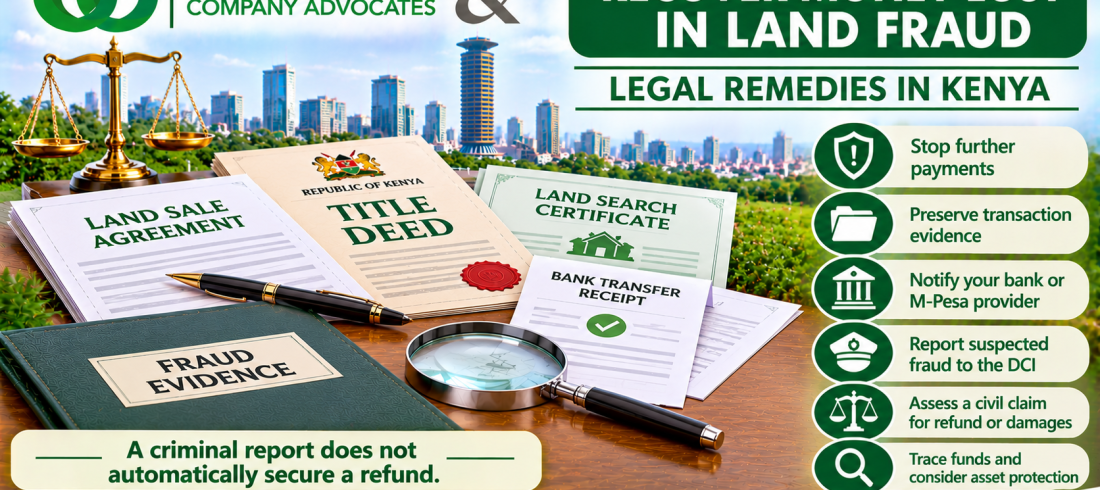
Preserve all transaction records
Keep:
- Payment confirmations.
- Bank transfer details.
- M-Pesa transaction records.
- Sale agreements.
- Receipts.
- Messages.
- Emails.
- Seller identification documents.
- Broker details.
- Telephone numbers.
- Advertisements.
- Copies of title documents.
Contact your payment provider
Where money was transferred through a bank or mobile payment service, contact the provider promptly and report the suspected fraud.
The possibility of recovery depends on the payment method, timing, available funds, provider procedures and other circumstances.
Report the suspected fraud
Consider making a formal complaint to the relevant authorities.
Provide the available evidence and explain how the transaction occurred.
Seek legal advice
A lawyer can assess the transaction, identify possible parties and remedies, and advise on appropriate legal action.
Do not assume that a WhatsApp conversation or payment receipt alone is sufficient to recover the money.
The available remedies depend on the facts, the parties involved, the evidence and the legal basis of the claim.
How to Verify a Land Seller Living Abroad
Buying property from someone living abroad can be legitimate, but the verification process should be carefully managed.
A diaspora seller may appoint an attorney or another authorised representative.
The buyer should independently establish:
- The registered owner’s identity.
- The seller’s identity through reliable documentation.
- Whether the seller is genuinely the registered proprietor.
- Whether the Power of Attorney is genuine.
- Whether the instrument has been properly executed.
- Whether registration is required and has been completed.
- Whether the Power of Attorney authorises the proposed sale.
- Whether the attorney is acting within the scope of the authority.
- Whether the documents executed abroad satisfy the applicable legal requirements.
- Whether the purchase price is being paid to the properly authorised recipient.
If the transaction is being handled remotely, your advocate should coordinate the verification and execution process.
Read our guide on Buying Property in Kenya from Abroad: How to Verify the Title, Seller and Developer Before Sending Money for more information on protecting property transactions involving diaspora buyers.
Land Seller Verification Checklist Before Paying
Before committing money to a land purchase, confirm the following.
Seller identity
- Obtain the seller’s full legal name.
- Obtain appropriate identification documents.
- Compare the names against the official land register.
- Review the KRA PIN details where applicable.
- Independently verify the seller’s identity.
- Investigate any name or identification discrepancy.
Ownership and title
- Obtain an independent official land search.
- Confirm the registered proprietor.
- Confirm the parcel number.
- Compare the title deed with the search.
- Investigate the root of title where appropriate.
- Check registered encumbrances.
- Verify that the land shown is the land being sold.
Seller authority
- Is the seller the registered owner?
- Is the property jointly owned?
- Is the seller a company?
- Is the seller acting under a Power of Attorney?
- Is the seller an administrator or executor?
- Has the seller’s authority been independently verified?
- Are necessary consents or approvals required?
Property
- Visit the land.
- Verify its physical location.
- Confirm the boundaries.
- Confirm the acreage where necessary.
- Investigate occupation.
- Check access.
- Identify possible disputes or encroachments.
Transaction
- Have an advocate review the transaction.
- Obtain a proper sale agreement.
- Identify the authorised recipient of the deposit.
- Confirm deposit protection arrangements.
- Establish completion requirements.
- Confirm the transfer process.
- Avoid rushing because of pressure from the seller.
How Okenyo Omwansa & Co. Advocates Can Help Verify a Land Seller
Before purchasing land in Kenya, it is important to establish not only whether the title deed is genuine, but also whether the person selling the land is the registered owner or legally authorised to complete the transaction.
At OKENYO OMWANSA & CO. ADVOCATES, we assist buyers, investors, property owners and Kenyans living abroad with legal due diligence and property transactions.
Depending on your circumstances, legal assistance may include:
- Reviewing official land searches.
- Verifying seller identity.
- Comparing identification documents with title records.
- Investigating ownership history.
- Reviewing Powers of Attorney.
- Investigating company ownership and authority.
- Reviewing succession documents.
- Examining sale agreements.
- Investigating suspicious transactions.
- Identifying title and seller-related risks.
- Reviewing developer transactions.
- Advising on property purchases by diaspora clients.
- Coordinating conveyancing and completion.
- Advising on suspected land fraud.
If you are about to purchase land and the seller is a broker, attorney, company representative, family member or person claiming to act on behalf of an owner, establish their identity and authority before paying.
Do not let urgency replace verification.
A legitimate land transaction should allow reasonable time for independent due diligence.
Contact Okenyo Omwansa & Co. Advocates for legal assistance with land seller verification, title investigations and property transactions.
Office: Mirage Towers, Mezzanine 2, Tower 2, Waiyaki Way, Westlands, Nairobi, Kenya
Telephone: +254 720 942 324
Website: https://okenyoomwansaadvocates.co.ke
Frequently Asked Questions About Verifying a Land Seller in Kenya
How do I verify that a land seller is the real owner in Kenya?
Obtain an independent official land search, compare the registered proprietor’s name with the seller’s identification documents, independently verify the seller’s identity and investigate any discrepancy. Where necessary, review the title history and supporting documents.
Is a title deed enough to prove that someone can sell land?
No. A title deed is an important ownership document, but the buyer should also establish that the person presenting themselves as the seller is the registered proprietor or has legally recognised authority to sell.
Can someone sell land using another person’s ID?
A fraudulent person may attempt to impersonate a registered owner or misuse identification documents. Buyers should independently verify the seller’s identity and authority before signing or paying.
How do I verify a land seller’s KRA PIN?
Request the KRA PIN certificate and compare the details with the seller’s identification documents and land ownership records. Where appropriate, use the official KRA verification service. A genuine PIN does not itself establish land ownership.
How do I verify a company selling land?
Obtain the company’s registration details, conduct an independent company search, verify relevant directors and confirm the authority approving the transaction. Review the necessary company resolutions and identification documents of the authorised signatory.
How do I verify a Power of Attorney used to sell land?
Investigate the identity of the principal and attorney, the authenticity and execution of the instrument, registration requirements, its scope, whether it authorises the proposed sale and whether it remains effective.
Can a family member sell land belonging to a deceased person?
A family member does not automatically have authority to sell estate land. The legal authority of the personal representative and the applicable succession requirements must be established.
Should I pay a deposit before verifying the seller?
You should undertake appropriate seller verification and due diligence before committing money. Any deposit should be paid under a properly documented arrangement that identifies the recipient, conditions of release and relevant refund or default provisions.
What if the seller refuses to meet me?
There may be legitimate reasons why a seller cannot attend in person. However, identity and authority must still be independently verified. A remote transaction should not proceed merely because the seller or broker insists that verification is unnecessary.
What if the seller is living abroad?
A diaspora seller may appoint a legally authorised representative. The buyer should independently verify the seller, the representative’s authority, the Power of Attorney and the transaction documents, including applicable execution and registration requirements.
What should I do if I suspect that a land seller is an impersonator?
Stop the transaction, preserve the documents and communication, independently verify the registered owner, investigate the seller’s authority, and seek legal advice. Where fraud is suspected, consider reporting the matter to the appropriate authorities.
Before paying for land in Kenya, verify the person—not just the paperwork. The title deed tells you what is registered. Seller verification helps establish whether the person asking for your money is legally entitled to sell it.