You have 0 items in your cart
Learn what Kenya’s Data Protection Act means for your business. Discover compliance requirements, penalties, and how to turn data protection into a business advantage.

Data Protection Act Kenya, Kenya data protection compliance, ODPC registration, data privacy law Kenya, business data protection Kenya, George Omwansa Okenyo, Okenyo Omwansa Advocates.
Why Was the Data Protection Act Enacted in Kenya?
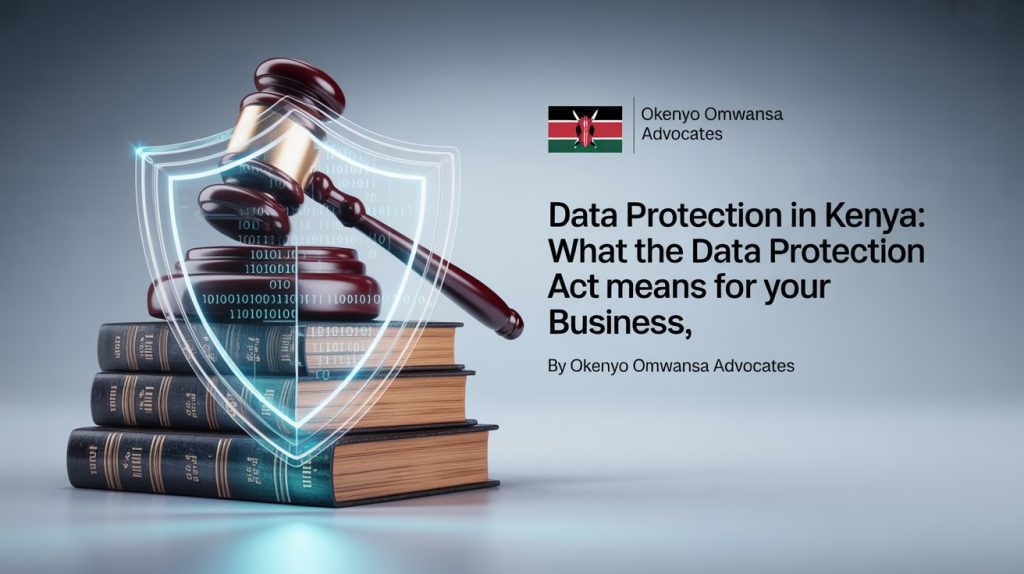
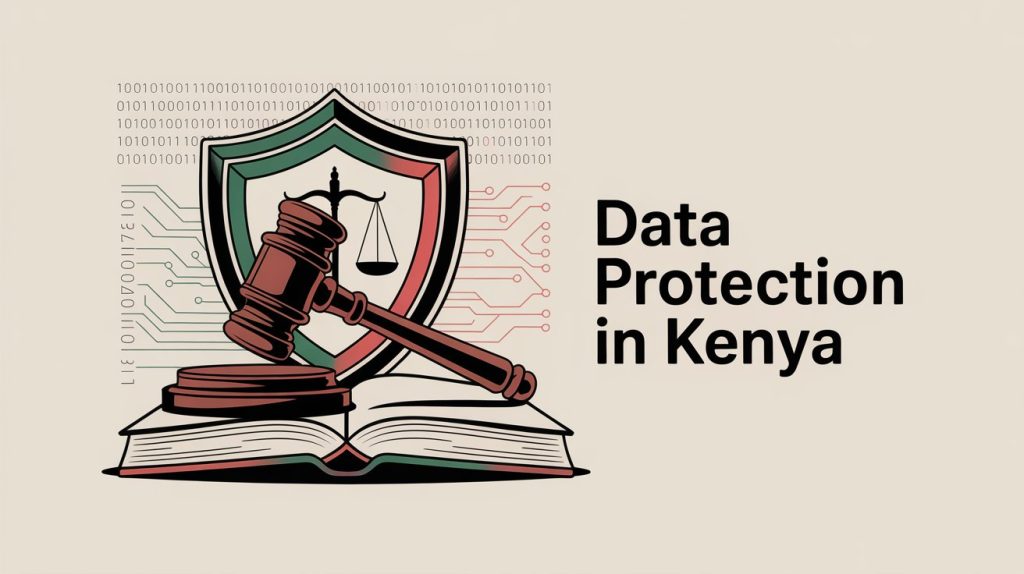
The Data Protection Act, 2019 (DPA) marked a turning point in Kenya’s legal landscape. Enacted to give effect to Article 31 of the Constitution of Kenya, 2010, the Act guarantees every person the right to privacy and protection of personal information.
For businesses, the law is more than a compliance box to tick. It is a blueprint for accountability, transparency, and trust in how customer and employee data is handled. In an age where data is often described as the “new oil,” mishandling it can destroy reputation and trigger regulatory penalties.
The DPA aligns Kenya with global privacy standards like the EU’s General Data Protection Regulation (GDPR), making compliance critical for local and international trade.

What Are the Core Principles of the Data Protection Act?
The DPA borrows from internationally recognized data protection principles. Every business in Kenya that collects, processes, or stores personal data must align with these six pillars:
- Lawfulness, Fairness, and Transparency – Data must be processed legally, fairly, and with clear communication to the individual.
- Purpose Limitation – Data should only be collected for specific, legitimate purposes and not repurposed without consent.
- Data Minimization – Collect only what is necessary for the stated purpose.
- Accuracy – Businesses must ensure personal data remains correct and updated.
- Storage Limitation – Data should not be kept longer than necessary.
- Integrity and Confidentiality – Organizations must implement robust safeguards against unauthorized access, loss, or misuse.
These principles aren’t just legal formalities—they reflect good business practice that fosters trust and brand credibility.
What Obligations Does the Act Place on Businesses?
The DPA creates distinct responsibilities for data controllers (those who determine why and how data is processed) and data processors (those who handle data on behalf of controllers).
Key obligations include:
- Registration with ODPC – All controllers and processors must register with the Office of the Data Protection Commissioner (ODPC).
- Consent Management – Consent must be informed, specific, and freely given before personal data is collected or used.
- Privacy Notices – Businesses must provide clear, accessible notices explaining what data is collected, why, and how it will be used.
- Respecting Data Subject Rights – Individuals have the right to access, correct, and request deletion of their personal data.
- Data Breach Notification – If a breach occurs, businesses must notify the ODPC and affected persons within a reasonable time.
- Cross-Border Data Transfers – Data may only leave Kenya if the recipient jurisdiction provides adequate safeguards.
Failure to meet these obligations can trigger enforcement action.
What Are the Penalties for Non-Compliance?
The ODPC has wide-ranging enforcement powers, including:
- Fines – Up to Ksh 5 million or 1% of annual turnover, whichever is lower.
- Suspension of Processing Activities – The Commissioner may suspend your right to process data.
- Reputational Damage – Non-compliance can lead to public enforcement notices and loss of client trust.
In today’s digital economy, reputational harm can be more damaging than fines. Once customers lose confidence in your ability to safeguard their data, rebuilding trust is extremely difficult.
How Can Compliance Become a Business Opportunity?
While many businesses view compliance as a burden, forward-thinking organizations recognize it as an opportunity to:
- Win tenders and contracts – Increasingly, government and corporates require proof of compliance before awarding contracts.
- Enhance customer trust – Clients are more likely to share data with companies that demonstrate accountability.
- Reduce risk – Compliance minimizes exposure to lawsuits, fines, and data breaches.
- Gain competitive advantage – In sectors like fintech, healthcare, and e-commerce, strong data governance can be a market differentiator.
In short, compliance is not just about avoiding penalties—it’s about building resilience and trust in your brand.
How Can Businesses Achieve Compliance?
At Okenyo Omwansa & Co. Advocates, we help organizations navigate the complexities of the DPA through:
- ODPC Registration support
- Drafting privacy policies and compliance frameworks
- Staff training on responsible data handling
- Data protection audits and risk assessments
- Cross-border data sharing advisory
- Representation before the ODPC in case of enforcement
Compliance is a journey, not a one-time exercise. We ensure your systems, staff, and policies align with the law while supporting your business objectives.
Secure Your Business Today
Data is the lifeblood of modern enterprises. Mishandling it exposes you to fines, lawsuits, and reputational harm. The Data Protection Act is not optional—it is essential.
By embracing compliance, your business not only meets regulatory requirements but also builds a culture of accountability and trust.
📩 Contact us for a Data Protection Compliance Check-Up
and let’s protect your business together.
FAQs on the Data Protection Act in Kenya
1. Who needs to register with the ODPC?
All organizations acting as data controllers or processors—including SMEs, NGOs, corporates, and even startups—must register if they handle personal data.
2. What counts as personal data under the Act?
Any information that identifies a person, such as names, phone numbers, ID numbers, biometric data, or financial information.
3. Do small businesses need to comply?
Yes. The law applies to all entities, regardless of size, if they collect or process personal data.
4. How quickly must data breaches be reported?
Organizations must report breaches to the ODPC and affected individuals within a reasonable time, typically within 72 hours of discovery.
5. Can data be transferred outside Kenya?
Yes, but only to countries with adequate safeguards or where contractual protections are in place.
6. What are the biggest risks of non-compliance?
Financial penalties, loss of business opportunities, lawsuits, and reputational damage.
7. How often should businesses review compliance?
At least annually—or whenever there are significant changes to data handling practices.
About the Author

George Omwansa Okenyo is an Advocate of the High Court of Kenya and founding partner at Okenyo Omwansa Advocates. He advises businesses on intellectual property, corporate governance, and regulatory compliance, with a special focus on data protection. George helps organizations transform compliance from a burden into a competitive advantage.